
How many times have you heard someone say, “At least this cold snap in January will kill all the mosquitoes.” But come spring they are divebombing your head yet again. The fact is that many kinds of mosquitoes easily live through a cold winter. All mosquito species have some way to survive, although different species manage this in different ways. In spite of their annoying way of leaving humans with red, itchy bites, mosquitoes are an important part of a food web. Birds, including purple martins and bluebirds, eat mosquitoes with gusto. Some fish eat the larvae and bats can eat up to 1000 mosquitoes an hour.
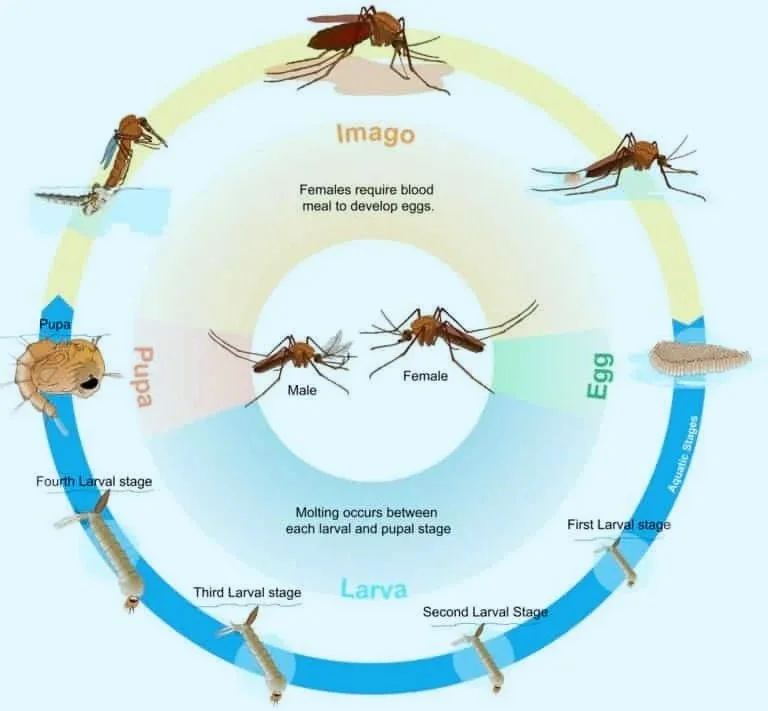
The mosquito life cycle is completed in four stages. All mosquitoes begin their lives in water as eggs. The eggs hatch and become larvae. A larva looks like a worm and must surface to breathe through a siphon that works like a snorkel. Larvae eat algae and other tiny creatures. The next stage is the pupa stage. Pupae don’t eat during this short period of time while they are changing into adult mosquitoes. The adult females then leave the water to seek blood sources for the protein they need to produce eggs. Adult males only eat plant nectar.
Mosquitoes like warm temperatures. Once the daily temperatures begin to dip into the 60s, they slow down. Below 50 degrees they stop flying altogether. They are cold blooded insects and cannot regulate their own body temperatures. Before it gets that chilly, the female’s mate and lay a last batch of eggs in water. At this point male mosquitoes die. No males live through freezing temperatures. Males will hatch from the eggs in the spring.
Females have a couple of different ways they ensure the next generation of baby mosquitoes will live to buzz around in the spring. Mosquito eggs can survive winter by becoming dormant under water and even ice. Their development stops until warm water wakes them up in the spring. Some species of mosquitoes can live over the winter as larvae. They also become dormant until spring. Pupa stage mosquitoes are unable to survive freezing or near freezing temperatures so most will die.
Depending on species, some adult females can live through winter. They enter what is called diapause which is similar to hibernation. Their metabolisms slow and they remain in that stage until the temperatures rise in the spring. After laying her last batch of eggs and before entering diapause, the adult female searches for a sheltered place to overwinter. This could be in a shed, garage, or basement. She might also find shelter inside logs, woodpiles, or animal burrows.
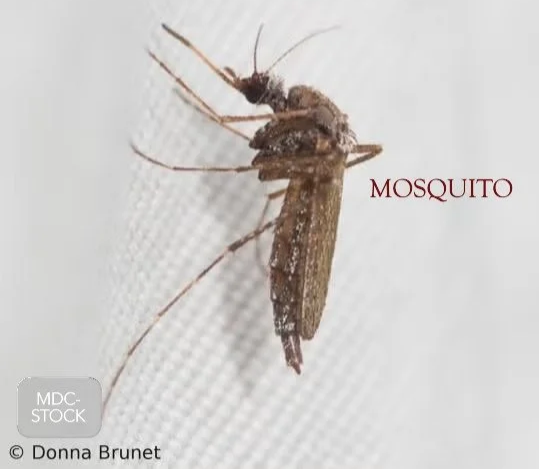
Once temperatures rise into the 60s in the spring, the females exit diapause. At this point a female is really hungry for a blood meal so she can lay eggs. This may be why mosquitoes sometimes seem more aggressive in the spring. Ice will melt and warmer water will allow the eggs to hatch into larvae. The life cycle begins again.
The best way to control mosquitoes is to deprive them of any standing water where they can lay eggs. Most mosquitoes have a fairly small flight range. They may live and breed within a few hundred yards up to a mile depending on species. If you can get rid of any standing water in your yard and perhaps persuade your neighbors to do the same, it can make a difference in how many mosquitoes you are swatting in May.
Submitted by Bonnie Hinman, 2014 Graduate
Cartoons from Getty, picture MDC, and life cycle via internet.