RIGHT IN OUR BACKYARD - Magical Indian Creek by Keith Jones

“I am haunted by waters.”-Norman Maclean in A River Runs Through It.

 Rivers seem to hold magical sway over everywhere they flow.  Their ecological and scientific qualities cannot be overstated, but the philosophical and spiritual aspects of a river impact us greatly as well.  To be sure, the ecological questions are of vast importance, and protecting a river is a priority; however, the magic found in flowing water leaves an indelible mark on one’s soul, if one only pays attention.

 I am blessed to live within a 10 minute drive of the major rivers of McDonald County.  Big Sugar is close enough I consider it to be my “backyard,” and Indian Creek is only slightly further away, but to the north.  The “Mighty” Elk forms in Pineville before meandering slowly to Oklahoma.  Indian Creek, however, has become my favorite of these streams.

 There is a bluff along Indian Creek that continues to haunt me.  It sits on the south edge of a fast riffle, and falls off quickly to the west.  The other side of the stream is formed by a small emerald pool, and a gravel bar just wide enough to sit and enjoy the scenery.  The first time I visited this spot it was about noon, and the sunlight streamed down through the silver maples and sycamores up the ravine.  Along the top of the bluff, cedars and little blue-stem hung on for dear life, while wild wildflowers proved their tenacity by not only sprouting, but blooming in the few places they managed to get a foothold along the bluff’s face.  I had tried unsuccessfully to coax a small-mouth out of the pool, so I sat down on the cold gravel and stared at the bluff’s face.  In my mind’s eye, I could see countless generations along the bluff and down into the ravine.  Young Indians padded happily along under the ancestors of the maples and sycamores there now, while the ancestors of those Indians watched from the behind the cedars along the top of the bluff.  I felt as if the ghosts of these generations past watched from the shadows of the trees.  I would like to think they approved of my presence, and I remained reverent as I sat there.  I certainly approve of their haunt.  

 The bluffs along all of my rivers have been worn down and smoothed out by time.  These are Maclean’s “basement of time” and the river has slowly carved them into shape.  Unfortunately, not all worshipers are as respectful of this ancient sanctuary and places where these bluffs are lined by the road bear marks attesting to stupidity.  Mark may love Angie, but Hallmark is a better conveyor of that sentiment than Rustoleum.  I can’t help but wonder how they could have missed the river’s magic.  Probably alcohol.

 And the trees!  Sycamores hang vicariously right at the water’s edge, seemingly defying gravity.  Occasionally, a flood provides the impetus for one to fall in the stream, adding a challenge to floater, but homes to the small-mouth.  Maples grow in the shade of sycamores, and an occasional cottonwood.  While I was paddling along Indian Creek as silently as possible, a soft breeze began blowing leaves out of the sycamores; a portend of autumn.  In many places, the stream narrows, and the end of the branches begin growing into each other, forming a tunnel.  I will have to go back once the leaves begin turning.  The magic that grows from the stream into the wildflowers during spring and summer also grows into the trees in the fall, as bright yellows get interrupted by flames of red Virginia creeper.  As if to show that the magic is still there, goldenrod and asters continue blooming into October, sweetening the breeze that knocks the leaves from the trees.

 As I floated along, I was startled by a screeching from overhead.  An osprey was clearly agitated by something.  It kept diving toward the top of tree before doing a quick turn and diving again.  As I rounded the corner, I saw the antagonist in the osprey’s story.  A bald eagle was perched in the top of the tree.  The town just wasn’t big enough for the two of ‘em.  My presence in the kayak disrupted their debate, and both raptors flew off to other fishing grounds.  

 The osprey, eagle, and myself weren’t the only fishers there that day.  Great Blue Herons stalked quietly along the edges, providing an example of intense patience and skill.  Green herons hopped through the tops of downed trees, watching for small fish, and Belted Kingfishers announced their annoyance at my presence.  I only hope they were experiencing better luck than I.

 I never leave a stream the same person I was when I first put my kayak in the water.  There’s too much magic in the water for that to happen, and I pray it never ceases to have an effect on me.  I am haunted by Indian Creek.  May it always be so. 

Keith Jones Bio:  

I grew up on a small farm outside of Anderson, Mo.  Since I was a child I have loved spending time in the woods, and the small patch of woods near my house left an indelible mark on who I am.  I joined Missouri Master Naturalist to meet like minded folks, and to find opportunities to expand my passion for nature.  I have been a member for only two years, and have met some great friends in our chapter.  One of my favorite past times is floating Indian, Big Sugar, or Elk River near my home, and I am blessed to live within 6 miles of all three creeks.  I also enjoy hiking Big Sugar Creek State Park and Roaring River State Park.  I am currently teaching Junior High Science at White Rock Junior High, near Little Sugar Creek in Jane, Missouri.  

Posted on November 17, 2015 .

FOREST FASHION - AMERICA'S TOP MODELS

                                                                      &nbs…

                                                                                                            Fall along Bee Creek

Field Notes by J. Cantrell

 Mark this moment friends.  The cooler seasons in the Ozarks is the ideal time for tree study for the budding naturalist in us all.  Some people fret as the days grow shorter, but as the sunshine gives way to early retirement, the spotlight of autumn goes to our native trees.  They are the true top models and they simply shine on nature’s runway.

As autumn carries on we see a transition of wardrobe for each tree species into splendor fall attire. The bright burning hue of the sumacs is usually the first to ignite the show. This season dogwood burgundy, mulberry lemon, blackjack red, and the brilliant yellows of coffee tree and beloved hickories are always the trend.  The forest will appear to be a changing color wheel for a three week period; tree species seem to take turns on which plant is the top model for the day making every autumn walk or Sunday drive unique.

Hiking along Bee Creek

A hike in the countryside is always in style among friends.  A good walk is prescribed by physicians, woodsmen and camera buffs alike; benefiting one’s cardio, our social media photos and strengthening friendships.

 Naturalist John Muir is not known for his fashion sense, but he did recognize the need for a walk in the woods. 

 “I never saw a discontented tree. They grip the ground as though they liked it, and though fast rooted they travel about as far as we do. They go wandering forth in all directions with every wind “…“I only went out for a walk, and finally concluded to stay out till sundown, for going out, I found, was really going in.”  – John Muir

fall at drury mincy ca ann bweb.jpg


No two falls are alike, whether in depth of color or our available days to get out and enjoy a trail.  My suggestions for enjoying the fall fashion show include Roaring River State Park, Hobbs State Park and Huckleberry Ridge Conservation Area for hiking and nature viewing. For those who prefer to drive, 39 Highway between Aurora and Shell Knob or Highway 112 between Roaring River and Seligman are excellent trips to soak up the scenery. Even once the leaves are shed, the forest models hold a beauty of their own. For the naturalist, the tree study continues, as the wonder of the trees is more than skin deep.  I hope to see you on the trail.  - Jeff

----------------------------------------------------


Jeff is a local Neosho biologist and tree enthusiast.  Questions on native tree id, field guide recommendation and places to hike can be directed to Jeff at coyoteteacher2@gmail.com  or the local master naturalist website www.chertglades.org


 Photos by Ann Butts


Posted on October 22, 2015 .

What a Wonderful World! By Billie Mullins

Everyone enjoys the variety of butterflies and moths, but did you know that there is also a huge variety of grasshoppers, ants, bees, flies, etc.? Insects are very important as pollinators and one of the lower items on the food chain for birds and animals.

 There have been various news articles in recent years about the plight of honey bees and monarch butterflies. Habitat loss and the use of insecticides and pesticides played a role in their decline. But there are some simple things we can do to play a role in preventing their decline.

 When you spray to get rid of an unwanted insect pest, you may also be harming several beneficial insects as well. A natural remedy would be just as effective and not as harmful to the environment. Consider using natural remedies for garden pests in your own gardens to help protect our pollinators. You can find a list of harmful and “friendly” remedies for garden pests at MU Extension’s website.  http://extension.missouri.edu/p/g7274

 Another suggestion is to plant native varieties. Native plants require less maintenance and are more beneficial to insects. Exotics are okay for some of your plantings—but you should check to make sure they are not invasive before you plant.

 Most of our drinking water comes from rivers, lakes and wells. What we put on the ground may end up in our drinking water. A corridor of trees and plants along streams helps clean up the run-off of fertilizers and pesticides from agriculture fields. Rain gardens help do the same in yards. Human and animal urine affects life in the river as does discarding trash in the river and along the banks. Helping to clean up river corridors, planting along rivers and streams, and building rain gardens all will help protect our drinking water.

 In the past, Native American Indians honored and cared for the land they lived on, and today we are now the custodians of the earth. Just thinking of ourselves as custodians of the earth is the first step to using some of these simple solutions to save and protect our environment.

 Creation is a beautiful tapestry with everything in nature connected---try not to unravel it. Get outside and go exploring, even if it is in your own backyard. You may be amazed at what you find and what you can learn.

Posted on September 25, 2015 .

INVITE A MONARCH TO LUNCH! PLANT MILKWEED! by Val Frankoski

monarchs on Goldenrod val resized.jpg

The secret to having Monarch Butterflies in your yard is milkweed. That’s it!!! The relationship between Monarch butterflies, their caterpillars and milkweed is not a casual one. It has developed over thousands of years. As a result…the caterpillars are very selective…picky eaters. Chemicals produced within all milkweeds protect the plants from being eaten by most animals…but not Monarchs. Monarchs are able to consume and deposit these same chemicals within their own bodies. This makes them taste very bad and protects them from many predators

Milkweed is the only thing a Monarch caterpillar can eat in order to grow and transform into the Monarch butterfly we all know and love. Without caterpillars…there would be no butterflies. Milkweed is considered their host plant. Female Monarchs come to milkweed plants to lay their eggs, because they don't have a choice. Milkweed is the only plant a female Monarch will use to lay her eggs.  If you want to guarantee that Monarch butterflies come to your yard or garden, you have got to plant some variety of milkweed. 

If you’ve been thinking about planting this season, November is definitely the best time for most of us to complete this simple task. In SW Missouri, we should have experienced our first frost by then, but it’s too warm for the ground to be frozen and too cold for seeds to sprout prematurely.

Fall is the best time for planting, since seeds need a cold treatment, called cold stratification, before they will sprout. Old Man Winter can take care of this naturally…or seeds can be kept in cold storage in a garage or outside building, or even collected from pods that wintered outdoors. Otherwise, they must be kept in the refrigerator for about 6 weeks prior to planting. 

Tips on different ways for planting milkweed seeds:

1.       The easiest way is to sprinkle some seeds around where you want them to grow after a killing frost. In southwest Missouri this would be late October. Make sure seeds have good contact with the soil.  The seeds experience winter and know when it’s time to get growing in the spring. Definitely the easiest method, but it’s hard to remember to look for them in the spring and to recognize the seedlings, so a plant label or other marker is advisable.

2.       A better method would be:

A.      Scrape off any weeds, rocks or other debris several weeks ahead of time in the area where you want to plant milkweed. To ensure success when establishing any native plant from seed, it is critical to first eliminate existing weed cover and reduce the amount of weed seed in the soil. Repeated shallow cultivation prior to planting is usually effective (The secret is to NOT scratch the surface deeply which can pull too many weed seeds up to the surface where they can grow and compete with your seedlings.)

B.      Just before planting (after the first killing frost) scratch the surface again to loosen the soil. Use the length of your hand to estimate approximate seed spacing. Cover the seeds lightly and water them into place. NOTE: Seeds can move over winter and some won’t germinate so exact spacing now is a waste of time.

C.      A label and a LIGHT coating of FINE mulch are good ideas, but no further care is needed until springtime when you should water seedlings during their first season as needed.

D.      1-2 months after your seedlings have sprouted next spring, consider transplanting to achieve correct spacing for your specific milkweed.

3.       Rather than just sprinkling the seeds at random, you might want to sow them in pots in the fall after a killing frost, insert a plant label, and then sink the pots into the ground to wait for spring. A plant label is important!

4.       If you choose to wait until springtime to plant your seeds, you will need to give them a cold treatment called stratification. To do this:

A.      Combine seeds with an equal or greater volume (up to 3 times) of dampened sand, perlite, vermiculite, or other sterile media. The media should be damp, not wet; it should not drip when squeezed! Some people place seeds between damp paper towels.

B.      Place seed and media in a sealed plastic bag and store the bag in your refrigerator (NOT freezer) for about 6 weeks until you are ready to plant. This is “artificial winter” for the seeds.

C.      Whether seeds are sown indoors or outdoors, the soil in the planted area must be kept moist for the entire germination period.

Patience is necessary! Even under ideal conditions, milkweed planted from seed may require more than one growing season to appear and become established. Try to have groups of at least 3 to 6 plants in order to more effectively catch the attention of passing Monarchs.  Carefully weed your milkweed garden to encourage growth of the milkweed.

Also, while Monarch caterpillars munch only milkweed, the adult Monarch butterflies sip their food from nectar supplying flowers, including milkweed.  To lure them in, it is also important to have other flowers with nectar to furnish an attractive buffet. When you are planting nectar sources, try to choose plants that will provide flowers throughout the growing season. Asters and Goldenrod are especially helpful during Monarch fall migration.

If you are impatient, you can always purchase native milkweed from a source in your area. In Missouri,we always recommend Missouri Wildflower Nursery (http://www.mowildflowers.net/).

Remember, it is important to plant both nectar flowers and milkweed native to your area when you want to invite a Monarch to lunch!


Posted on September 24, 2015 .

Wondering About Webworms? By Katharine Spigarelli

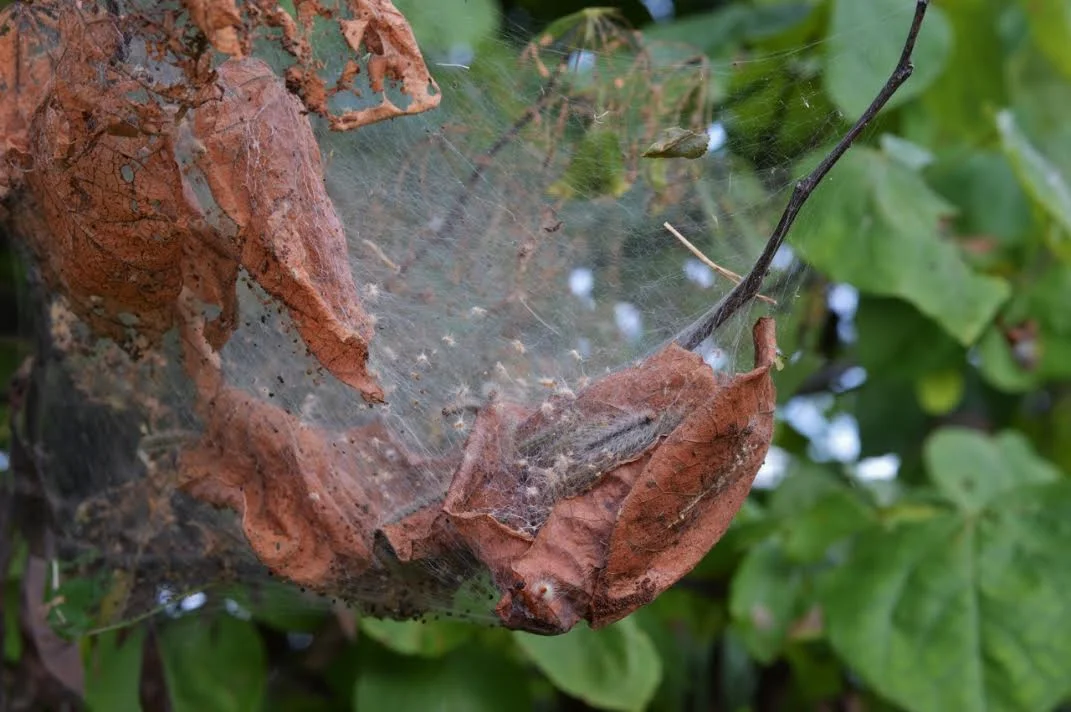
Webworms have invaded us!  Everywhere we look, they are there.  As we drive down the road, they envelop the limbs of the trees that line the roadways.  They invade the trees that inhabit our yards.  In the morning and evening light, they look like a veil covering the trees. They seem to have landed like an alien invasion. 

Webworms have always irritated me.  I’ve wondered what damage they were doing to the trees and shrubs that I love.  After a discussion at a recent Master Naturalist meeting, I was asked to do an article for our website to share some of the thoughts we discussed.  So, I began my research. 

Jeff Cantrell, our awesome Chert Glades advisor, assures us that the webworms do not normally cause lasting damage.  They come and they go, but the trees will survive.  It was hard for me to believe this because I was watching them consume large areas on the trees that I loved.  But, trusting Jeff, I tried to relax and not worry that they would cause irreparable harm.

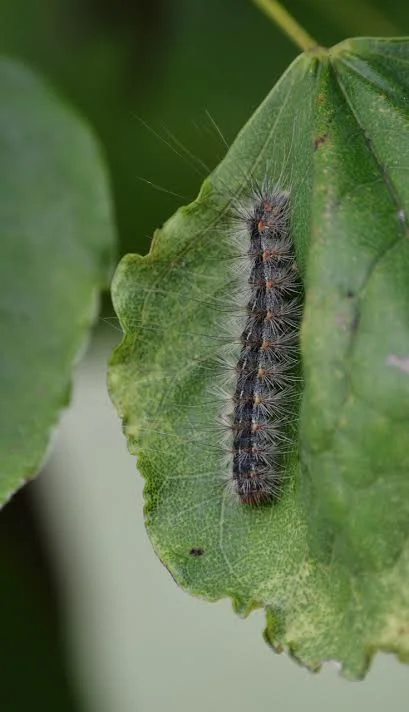
Jeff’s assurances were confirmed in my research.  I learned that webworms, technically Fall Webworms, Hyphantria cunea, are native insects and do not usually cause irreparable damage because they attack the foliage later in the growth cycle, after the energy has been stored.  Different trees are usually targets from year to year and therefore the trees are able to recover.  If a tree is attacked year after year, recovery is more difficult.  The Fall Webworm attacks over 100 species of deciduous trees and shrubs.  It builds its web on the ends of branches.  The larvae will feed on the leaves of the tree for about 6 weeks, continually enlarging the web.  If you ever look closely at the web, you will see a mass of writhing caterpillars.  It looks repulsive.  They are feeding voraciously and look like something a horror movie could use to terrorize its audience.  At this point in the cycle, the “worms” (caterpillars) have turned into moths and left the webs.  What is left is the web and the withered remains of brown leaves and stems.  Although I am bothered when I see the damage caused by the webworms during this season, knowing that it is temporary is helpful.  It also helps to remember that it is all a part of the circle of life.

The Fall Webworm is sometimes confused with the Tent Caterpillar, Malacosoma, spp.  It attacks the tree by building its web in the crotches of the tree and because it attacks earlier in the season, it can cause more irreparable damage.  Both the Fall Webworm and the Tent Caterpillar cause unsightly defoliation.  The webs may last into the winter when weather eventually causes it to fall away.  

Both species have natural predators, such as birds, small mammals, spiders and other insects, etc.  Some people who are annoyed with the webs and defoliation of trees on their property will tear open the web with a stick and let the birds have a feast. 

I used to think that I had to cut off the infected branch and soak it in gasoline (yes, horror!) or burn it in a burn pile.  This would sometimes leave my tree uneven or having large gaps.  Some people will want to spray with chemicals, but it is important to understand that those chemicals may also kill the birds that are feeding on the insects.  It would be better to just be patient and know that they will soon be gone.  Now that I know the damage is not normally permanent, I will relax. 

This year has been a banner year for the webworm.  All the factors necessary for them to thrive must have been right because there seem to have been more than I’ve ever remembered. 

I still do not like the looks of those nasty caterpillars eating away at my beautiful trees, but I can learn to live with them.  I will remind myself that they will soon be gone.  As with all things, a little knowledge goes a long way towards understanding.


Photos by Katharine Spigarelli and Kevin Mouser

Posted on September 24, 2015 .

EVENING ON THE PRAIRIE By Ann Butts

It is impossible to walk a prairie and not use some time for reflection.  Sometimes rolling hills of grass, other times colors blazing, and still others mother nature’s fury on the plains.  You can experience all of this on a prairie walk.  Comfort in the tall swishing grass.  Wonder at the color available in the wildflowers.  Contrast between the wet boggy areas and dry mima mounds. The rich heritage of Missouri’s prairies includes the Osage Indians’ love and respect for this land.  In the book by Robert Liebert,Osage Life and Legends, he discusses their love of the prairies that helped sustain life for them.

The home of the Osage was a lush and nurturing land, which they loved with an almost patriotic fervor, and praised it often in their songs, stories and prayers.

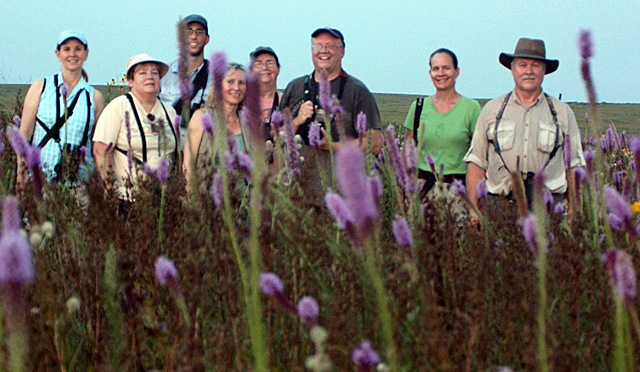
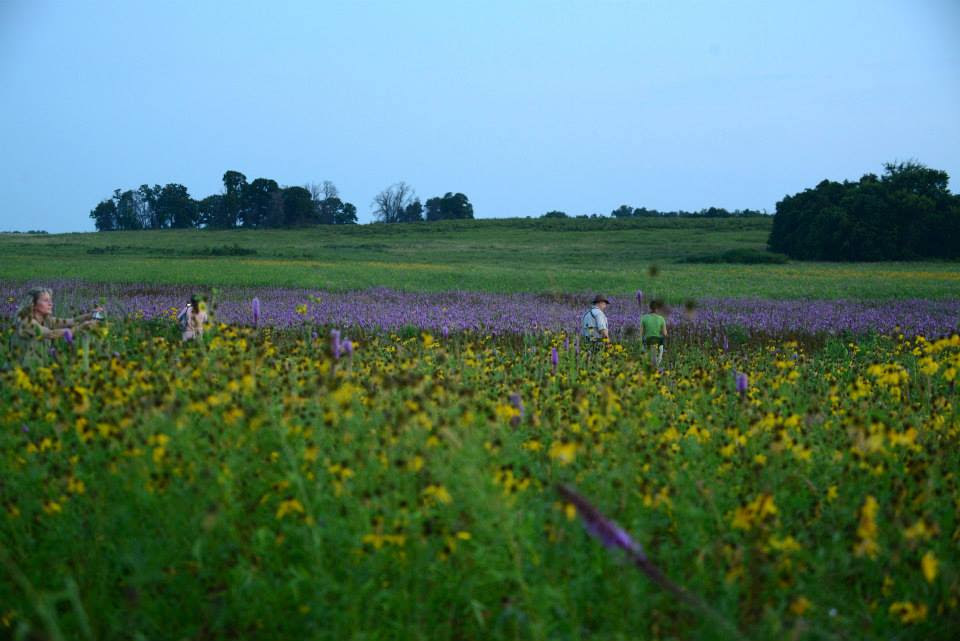
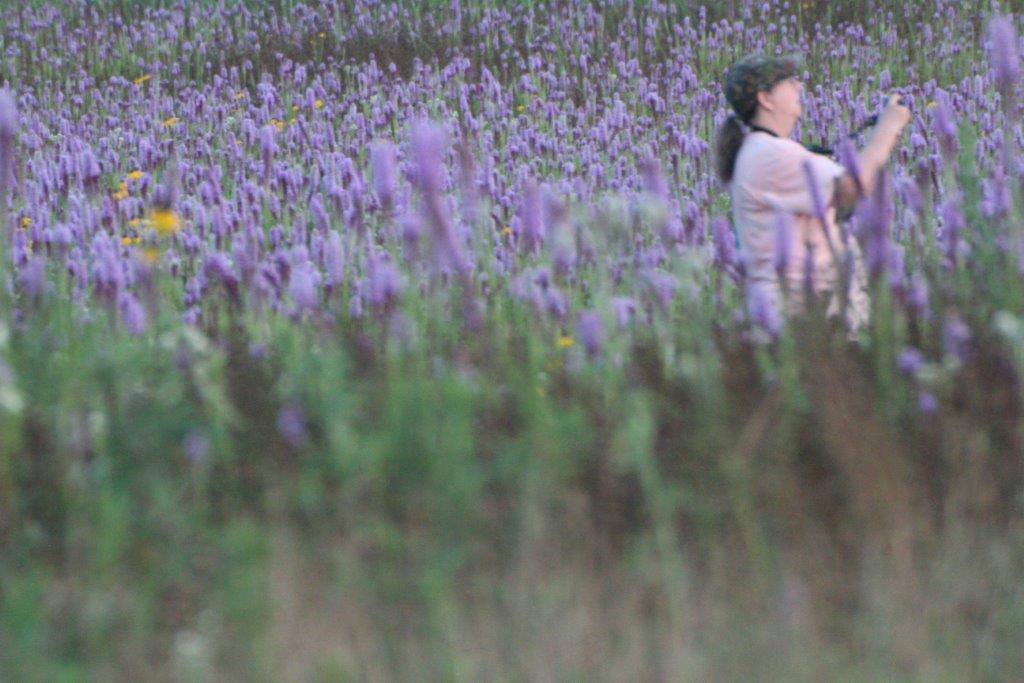
Members of the Chert Glades chapter of Missouri Master Naturalists bonded with our Osage forefathers on a recent evening walk at Coyne and Welsch prairies in southwest Missouri. Prairie walks among naturalists are full of discussion, discovery, and decompression.

We typically fan out into small groups each with a different objective.  This is not planned, it occurs naturally.  Some will discuss and photograph the sighting of certain plants, some will search for an endangered species, and others will simply walk with thoughtful gracefulness and observation. It is a site to behold, with the love of prairies so obvious in each person’s fervor.

Jeff Cantrell (MDC) offered this summary of the evening’s events: “Our first evening was a lengthy walk (for I was short on time to scout), hindered by some standing water while we raced the twilight.  But now that I (we) know of some highway pull-offs the “valley of the blazing star” is very easy to reach.  However all of the site produces wonderful discoveries every time we go out. 

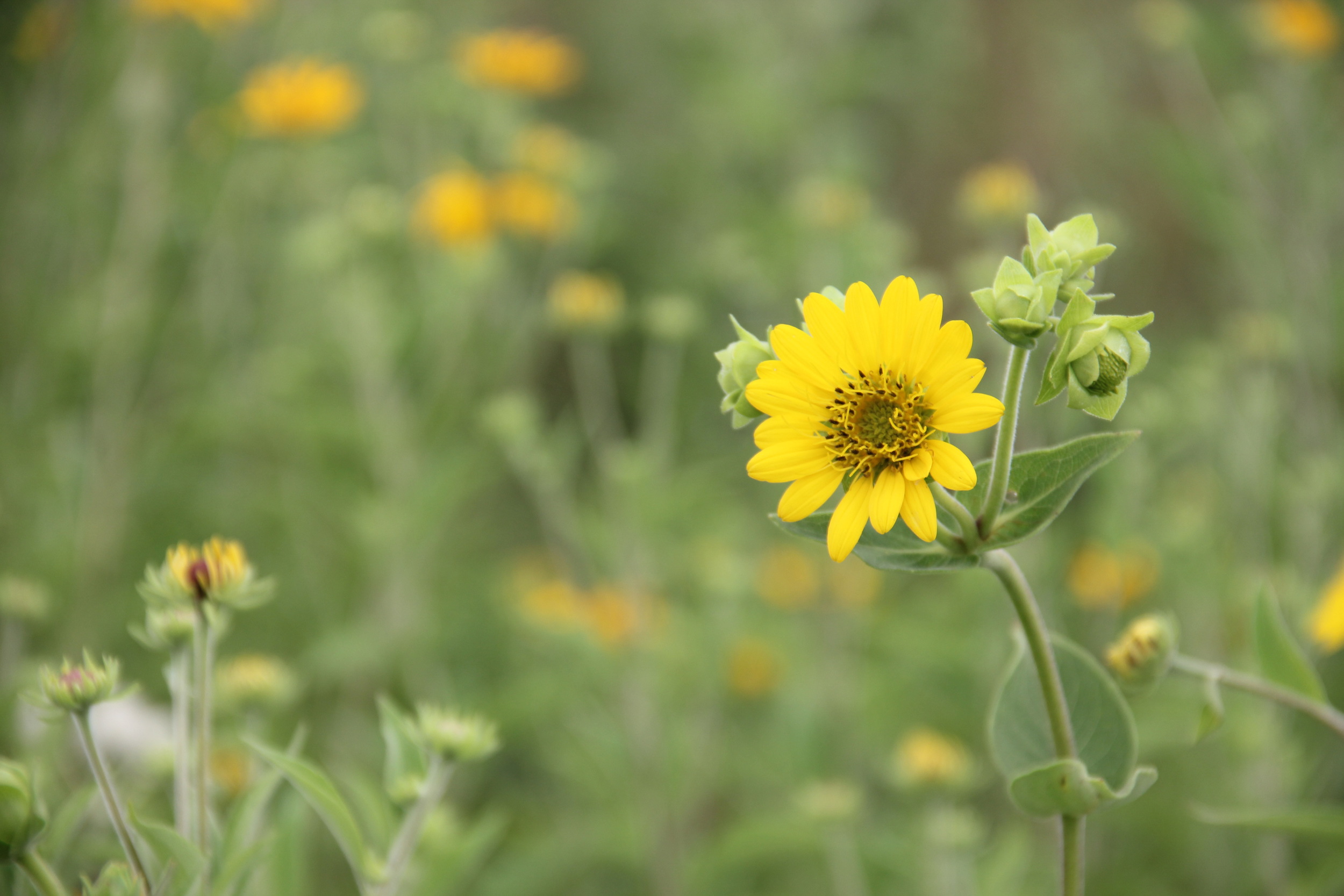
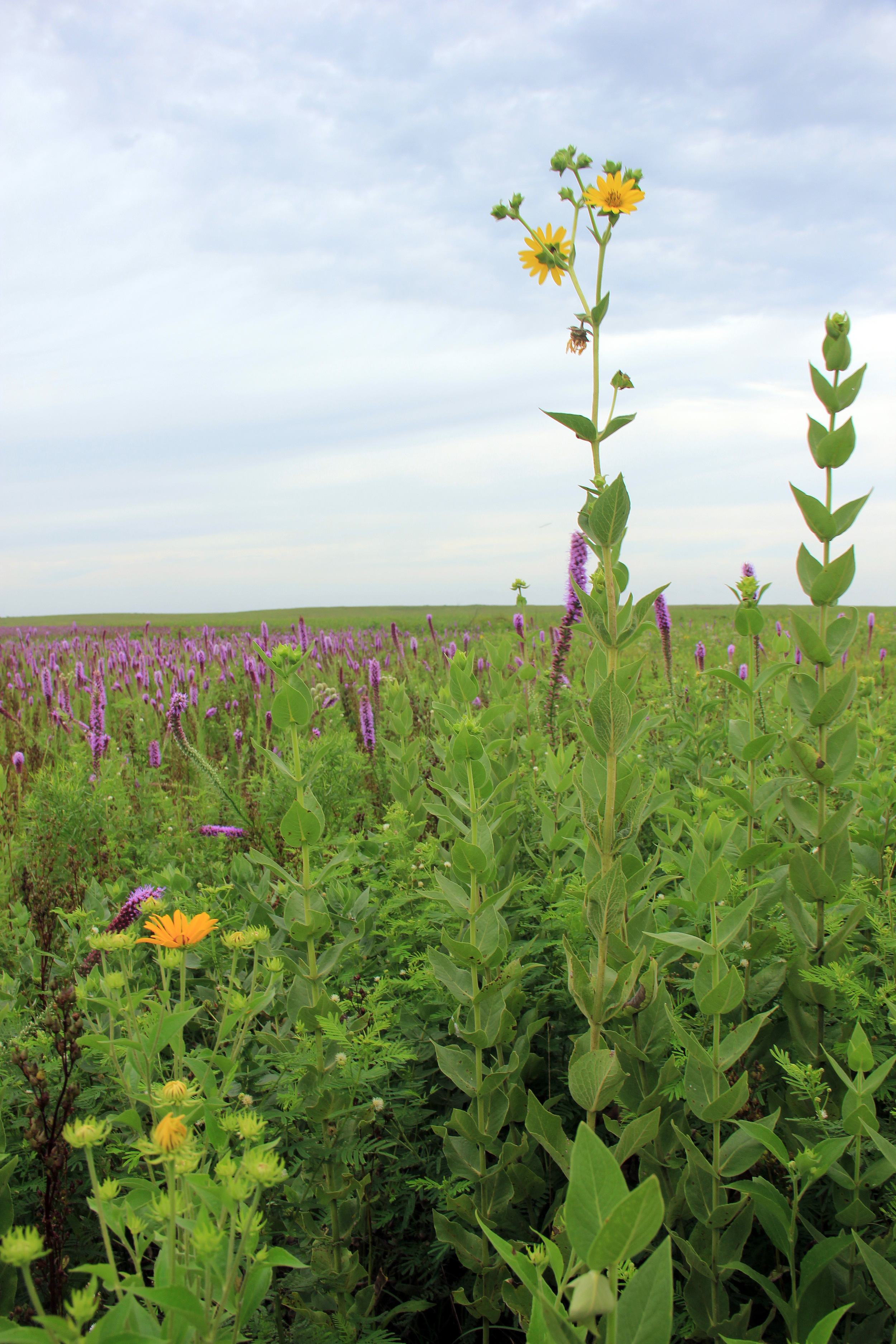
 Some of our discoveries include lots of Wild Petunia (Ruellia), Rattlesnake Master, various forms of Rudbeckia, and sunflower species ready to take control of the grassland.  My favorite was the seedbox clinging to the eroded banks.

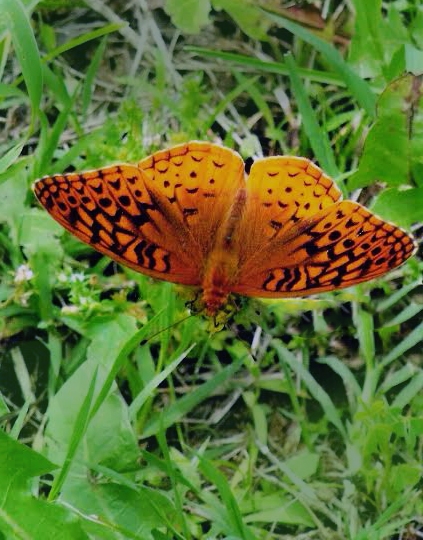
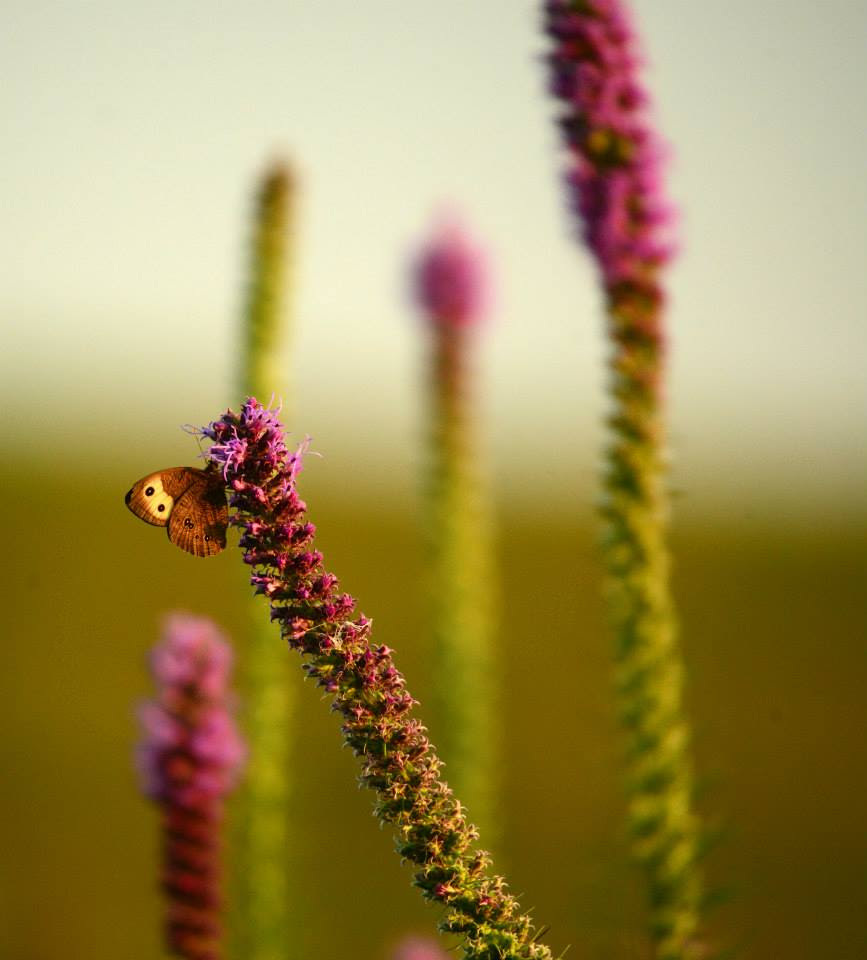
 A handful of endangered regal fritillary butterflies, monarchs, pearl crescents, red-spotted purple, wood nymph, golden byssus (a skipper species), sooty wing skipper, silver spotted skipper, cloudless sulphurs, clouded sulphur, giant swallowtail, black swallowtail, tiger swallowtail, silvery checkerspots, variegated fritillary,  and several other Lepidopterans were along the walk.”

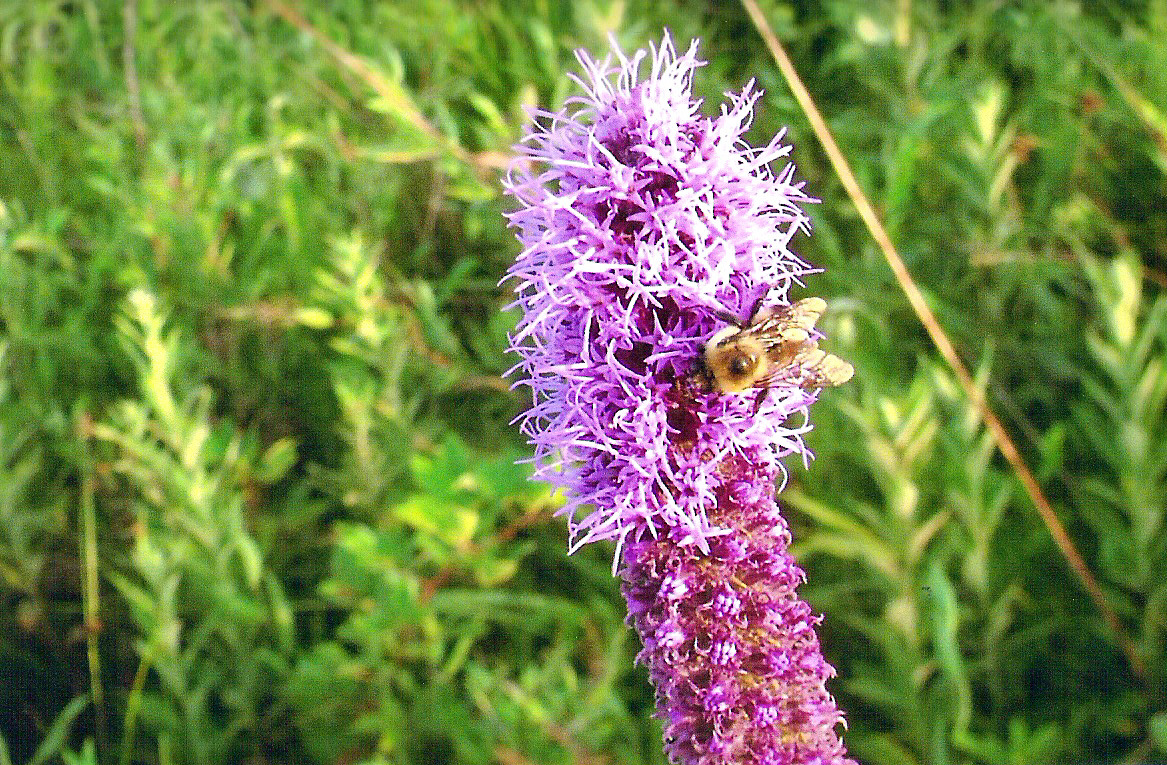
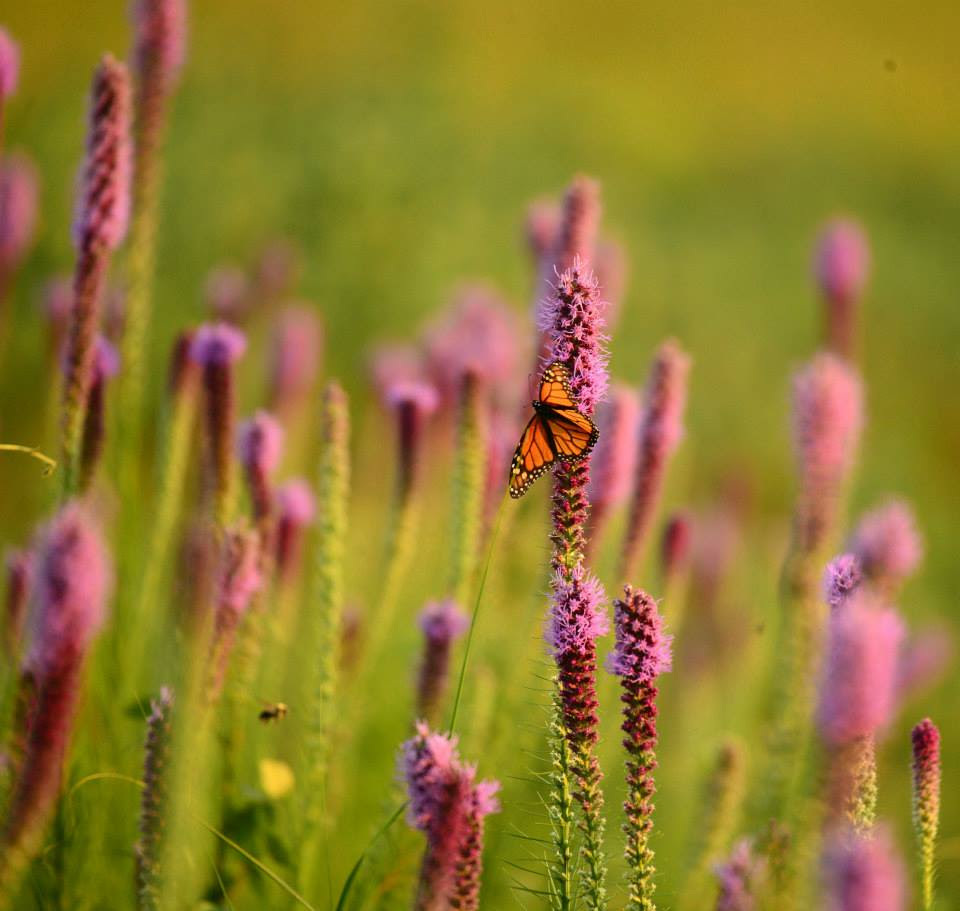
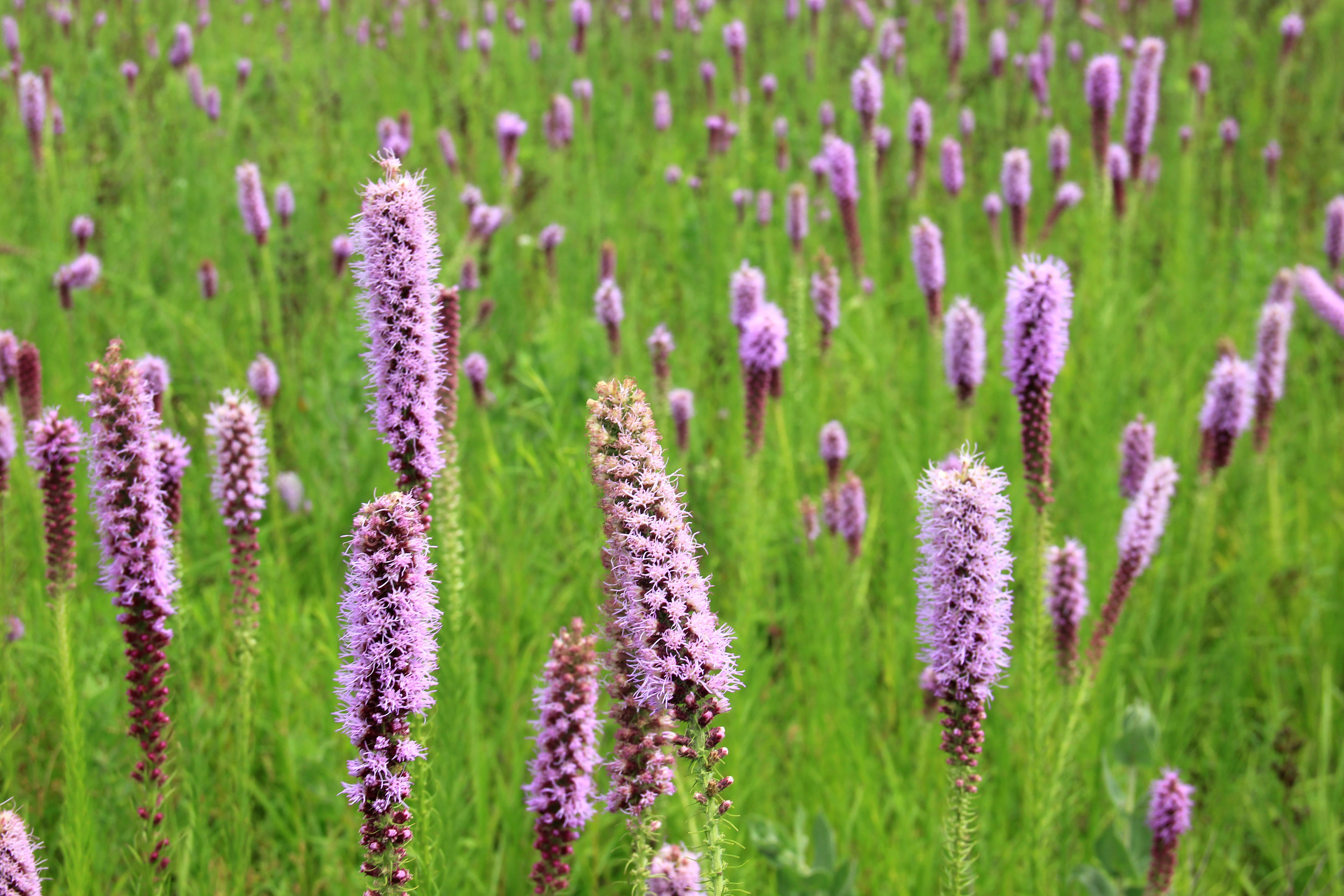
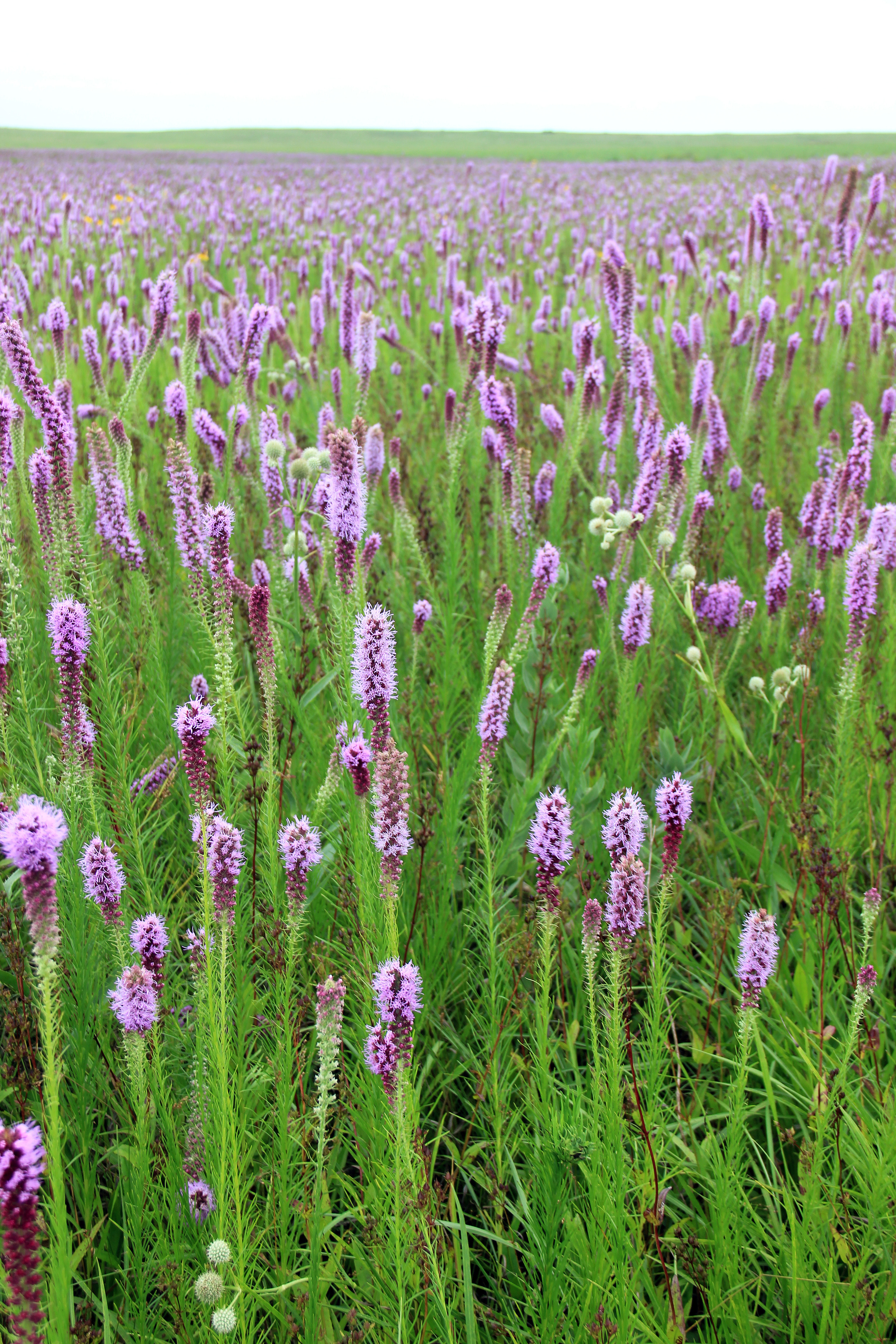
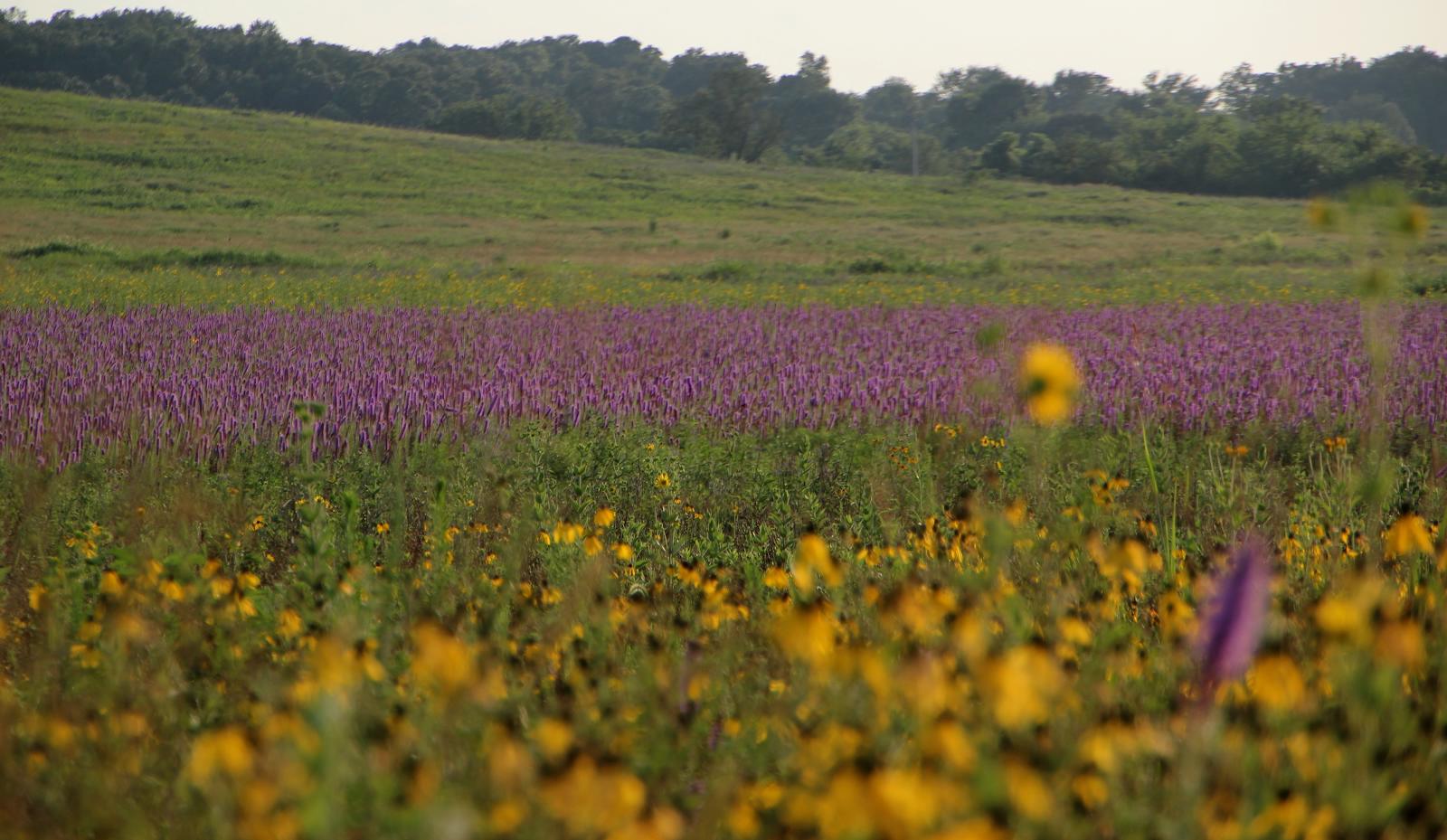
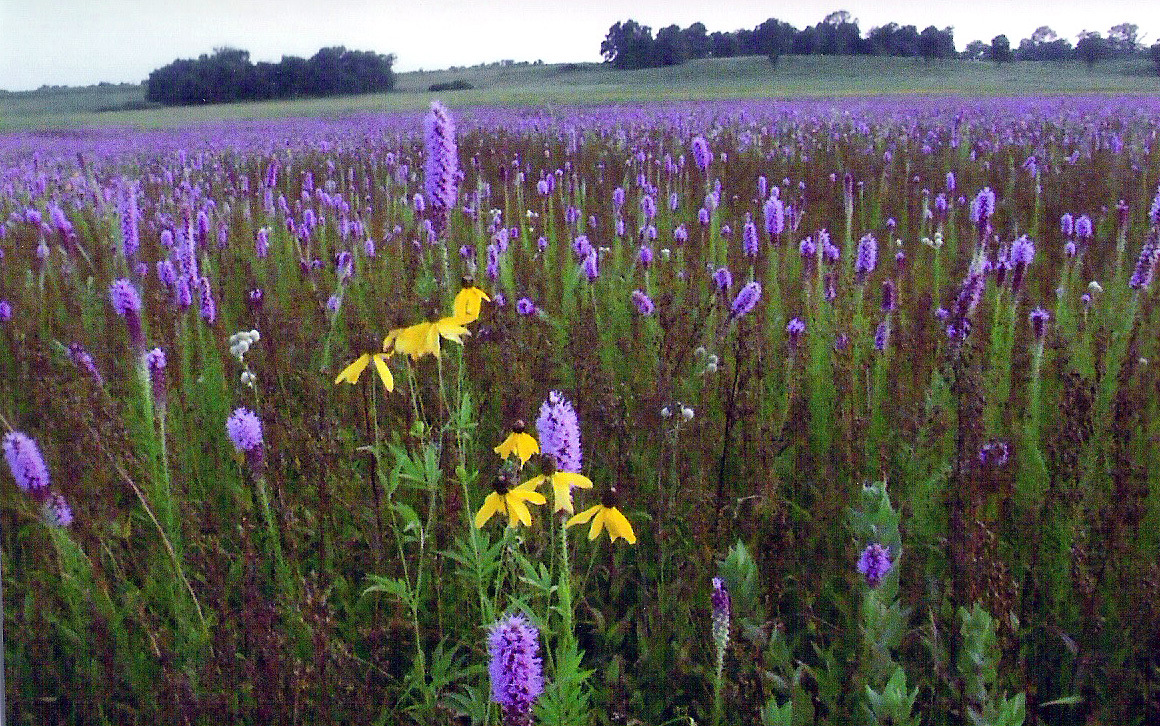
Blazing star was the hit of the evening.  Many naturalists could not believe the “sea of purple” they saw, and some could not wait to get to another prairie location to see if the purple was evident there.  It is this unique character of prairies, ever changing – ever the same, that draws us to them. You never know what you will find, each location seeming to have its own agenda on when certain plants will bloom.

The Osage Indians attempted to reflect the natural order of the earth in every part of their lives, with total respect for the natural world. Today’s master naturalists must have inherited that conviction from them.  Our view is to respect the peace, harmony and order of nature while continually learning how to preserve and protect it. There is no better way to accomplish this than to get out there and “be present” on prairies and other natural areas to observe firsthand the amazing glory that surrounds us.

Please enjoy photos from several of our talented photographers from our evening on the prairie.


Hidden Signs of Spring by Kevin Mouser

The spring colors are on the way! Trees are showing signs of life with buds getting green, birds are returning from vacations in the Southern Hemisphere, and the peepers are keeping us up at night with their mating calls from any little wet area near our houses. These are all clear signs of spring. Many of us spend the better part of February and March repeating a mantra of “spring is just around the corner.” When we gather with our friends, neighbors, loved ones and fellow employees the conversation often turns to signs of spring. There is one sign of spring that many of us don’t even know about even though we drive past it, or over it, every day.

Every spring, as the cycles of light change, and the water begins to flow a little more regularly; the streams of the Ozarks begin to color up. The color comes in the forms of red, blue, and green scales on small, unknown fishes. Not unlike the migration of the birds back to our forests, the fish regain their color for spring breeding on their own time schedule. Some of them like to breed early, when only the most die-hard fish-head would consider going into a stream to look for them. Some, not unlike most of us, enjoy the warmth of a late spring day to strut our stuff. With the exception of a few of the dry or hot months of the late summer or fall, there is almost always a fish in breeding colors in Missouri.
Here in the deepest of Southwest Missouri we have several species of darter, a bottom dwelling, small fish that loves to dress to impress in the early spring. The male orange throat darter sports a beautiful combination of red and blue in his fins. These guys can be so colorful that is possible to see their colors from the shore. If you want to see one though you will have to look in the cool spring fed waters that they prefer. Greenside and banded darters both sport a coat of emerald green when they are trying to attract the attention of the ladies. You will find both of these in bigger streams like Shoal Creek, and around vegetation where their brilliant green isn’t quite so obvious. Stippled darters are a less common, but beautiful species of our small creeks. Like the orang throat darters they prefer the small springs and cool waters. They spend much of their time around vegetation. When they are trying to attract a mate they sport a bright orange belly, while the rest of the body turns very dark. They are quite the little gem to pull out of a mass of submerged weeds. These are just a few of the colorful darters of Southwest Missouri.
Spring is on the way. The darters know it, the robins know it and judging by the number of times I have glanced out the window longingly as I write this, I know it too. Brave the cold and rain a bit and get outside and welcome it. If bravery is calling your name, maybe you will even put on a pair of rubber boots and go look for some hidden signs of spring in your local streams. However you want to greet spring, please take the time to leave it a little better than you found it.

Kevin Mouser is a member of the Chert Glades Master Naturalist Chapter.  He is the Special Education Science teacher, Ecology teacher and Science Club sponsor at East Newton High School. When he is not teaching, driving a school bus or sleeping, he really enjoys spending time with his wonderful wife Cristal and getting into the great waters of the Missouri Ozarks.

Photography by Kevin Mouser and Becky Wylie

- See more at: http://chertglades.org/?p=2165#sthash.yyaCUYwK.dpuf

Trees in Winter by Katharine Spigarelli

I love trees. Call me a “tree hugger” and I’ll take it as a compliment. It’s a label I wear proudly. So, tree watching is a pastime that occupies my time as I walk, drive, or just sit in the backyard. What might be surprising to many people is that one of my favorite times of year to “watch” trees is winter. I know, you’re thinking “What?!!!” When most people think of trees in winter, they think of drab, gray, and unpleasing.

When asked which season has the most beautiful trees, most people would probably respond that autumn trees are their favorite. It’s hard not to love trees in autumn. Their colors are beautiful and warm and are the subject of artwork and photography. I love trees in autumn. In springtime, seeing the buds emerge on trees and the freshness of the newly formed leaves is always exciting. We all love the beautiful greens of spring trees and the blossoms on dogwoods, redbuds, and other flowering trees that come with the warming temperatures of spring. I love trees in spring.

In summer, we are thankful for the shade of trees that provides us relief from the heat and reprieve from the blazing sun. The coolness of a tree lined hiking path or a shady backyard are wonderful gifts in summertime. I love trees in summer.

But, what, you ask, do winter trees have to offer? Winter trees allow you to see their potential. For me, one of the things I enjoy most when driving is looking at trees. You can see their trunks and limbs. It’s interesting to see the forms they have. I sometimes look at them and think of how they are like people. Some are long and slender. You can imagine them modeling hiking clothes. They look like they must always be on the go, never sitting around being lazy. Some are full and squatty and seem to be vertically challenged. They offer great protection for our friends, the birds.


When you look more closely, you can often find nests that are not visible in the other seasons. Some trees appear to be perfect, just like some people. They spread their limbs both vertically and horizontally and seem to have everything you could want for a tree in your yard. Their strong limbs look ready for the treehouse or the swing and their perfect shape makes you visualize them in the front yard of any home. Some trees seem to have had a tough life, but aren’t quite ready to give it up. Some of their limbs may be gone, some are barely hanging on. Other trees seem to have let themselves go and their branches kind of stick out randomly. They show the effects of age with sagging and straggling limbs. They make me smile as I enter that stage of life.

Trees in winter allow us to better enjoy the beauty of a sunrise or sunset. Seeing the colors of the sky through leafless branches enhances our enjoyment of the experience. There are few things more beautiful than a winter sunset glowing through a group of trees.

I love trees in winter because they reveal hidden treasures. Have you ever passed by a place in winter and all of a sudden you notice an old barn, homestead, tree stand, or some other mystery that you’ve never before noticed? It’s pretty exciting to find something that’s been hidden by the leaves of trees and is now revealed.

I love trees in all the seasons. But, as much as I love them all, I think I most love trees in winter. They offer a certain peacefulness and welcome contemplation and meditation. So, as you take your next long drive, put down your phone, look around, and notice the shapes, the strength, and the groupings. Enjoy

A Happy Ending With a Touch of Class By Jeff Cantrell

Field notes and photographs by J. Cantrell

I was ten and participated on my first guided hike and it just so happened to be in amazing Yellowstone.  My folks are national park enthusiasts and my mom’s mission this trip was to grant her young conservationist the gift of a rare wildlife experience.

When we think of wildlife, endangered species stories frequently emerge and they have a gloom and doom undertone to them.  Biologists strategize on how to reverse the decline of the population while the nature-loving communities offer support any way they can contribute.  So unfortunately when the subject regarding threatened species comes up we are prepared for a grim outcome.


The trumpeter swan is the largest of North American waterfowl and surely one of the most stunning. The trumpeters to me simply symbolize all that is graceful and stylish in nature.  A swimming swan resembles an ice skater’s refined glide and their reflection appears to pursue the bird on a blue or silver mirror.  The adults are a crisp bright white, while the juvenile’s plumage matches the winter sky.  They are a true conservation success story recovering from brutal market hunting for their skin, feathers and meat.  Quill feathered pens were a favorite instrument of John James Audubon to tailor the groundwork sketches for his celebrated bird paintings.  The swan feathers inflated pillows and mattresses for the aristocrats and colonists to rest well and dream of the promises of a fresh America.  The trumpeter swan contributed a great deal to our pioneer heritage and we find their presence carved on furniture, printed on currency notes, in Native American culture, and much more.

They emerge from a population less than 70 trumpeters in all of Canada and the lower 48.  They rode the conservation/preservation wave of early conservation laws and the collapse of plume hunters and feather fashions.  Heroes like Teddy Roosevelt, George Melendez Wright and William Hornaday were in their corner.  Today, our area benefits from captive conservation breeding flocks of Iowa, Minnesota and Wisconsin.  It is fortunate the birds don’t recognize state borders and so we benefit from trumpeter swans vacationing here during the winter.  After being completely absent, I have now witnessed them steadily increase in our area every single winter these past 20 years.  Their occurrence restores their place in our culture and history; they certainly glide across our view with a wonderful sense of style.  The story of the trumpeter swan is a real conservation story. I love happy endings especially when they have a touch of class.

I look forward to seeing you on the trail. – Jeff